You notice it at about 3am. A dry throat. A blocked nose. Heavy air that makes the whole room feel close and stale. That is air quality for sleep in real life - not a theory, not a trend, just the difference between drifting off properly and waking up feeling as if the room has been working against you.
Most people think about sleep in terms of mattresses, blackout curtains and bedtime routines. Fair enough. But the air in your bedroom plays a quieter role, and often a bigger one than expected. If the room is dusty, stuffy, too humid, too dry or full of lingering irritants, your body notices even when you are asleep.
Good bedroom air will not fix every sleep problem. Stress, noise, light, caffeine and health conditions still matter. But cleaner, better-balanced air removes one common source of friction. For many households, that is the practical win.
Why air quality for sleep matters
When air feels clean, breathing tends to feel easier and more natural. That matters at night because your body is trying to settle into a steady rhythm. If your nose is irritated, your throat dries out or allergens keep triggering mild inflammation, sleep can become lighter and more broken.
Poor air quality can show up in small ways that are easy to dismiss. You wake with a dry mouth. You feel slightly congested in the morning. Your partner snores more when the bedroom feels stuffy. You toss the duvet off because the room feels damp, then pull it back on because you feel chilly an hour later. None of these signs prove one single cause, but together they often point to a bedroom environment that needs attention.
There is also a comfort issue that goes beyond symptoms. A room with fresher air simply feels easier to relax in. That matters after a long day, especially for people who want straightforward ways to make home life calmer without turning it into a project.
What actually affects bedroom air
Bedroom air quality is rarely about one dramatic problem. More often, it is a mix of ordinary things building up over time.
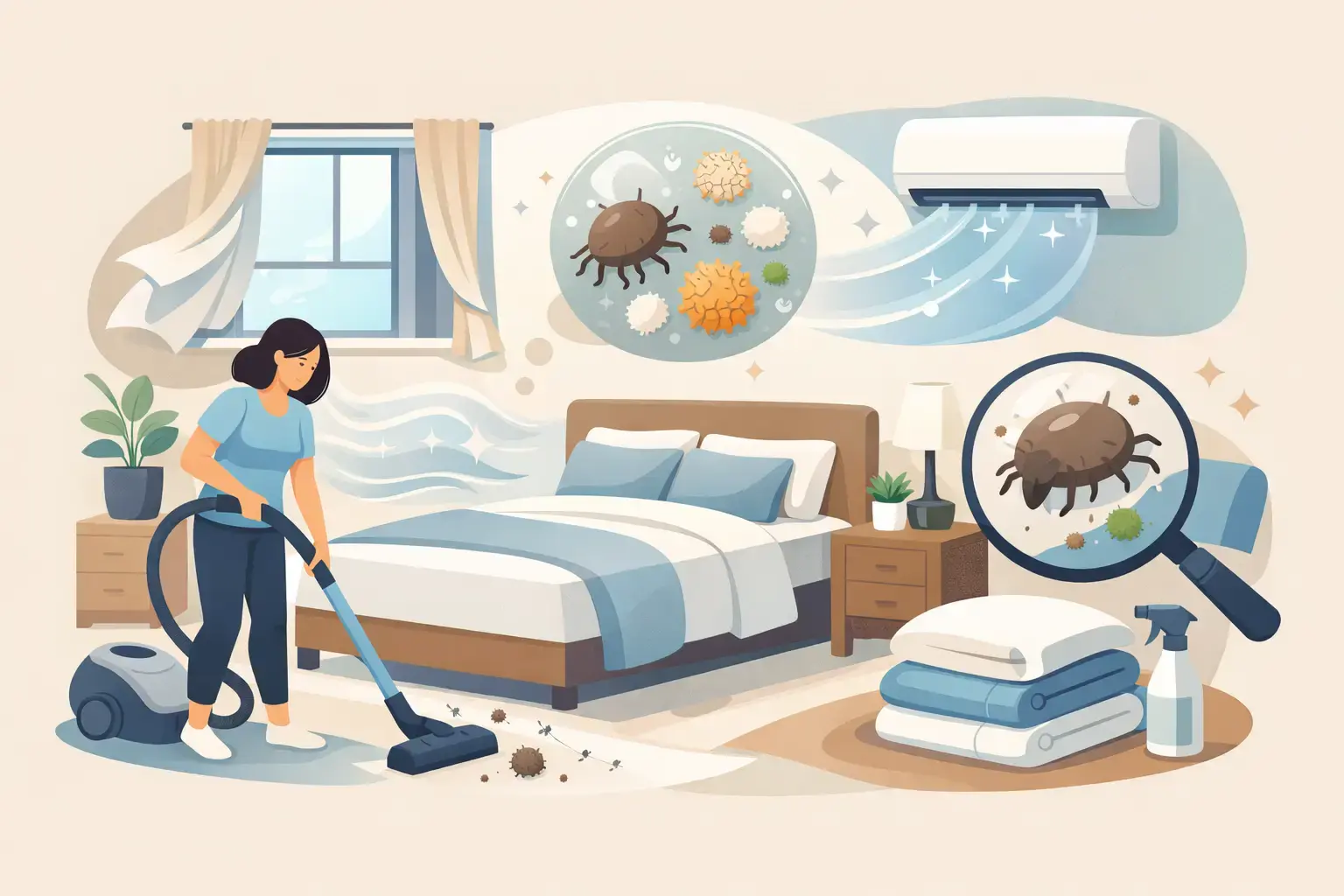
Dust is the obvious one. Bedding, carpets, curtains and upholstered furniture can all hold onto particles that get stirred up as you move around. If you are sensitive to dust mites, even a clean-looking room can still be irritating.
Pet dander is another common factor, particularly if your dog or cat sleeps in the bedroom. For some people, that is a trade-off worth making. But it can affect overnight breathing more than people realise.
Humidity matters too. Air that is too dry can leave your nose and throat irritated. Air that is too humid can make the room feel heavy and encourage mould growth. There is no magic number that suits every person and every home, but extremes at either end tend to cause trouble.
Then there are odours and airborne particles from daily life. Cooking smells drifting upstairs, cleaning sprays, scented candles, traffic pollution from an open window, and older homes that do not ventilate especially well can all contribute to stale or unsettled air.
Signs your bedroom air may be affecting sleep
The easiest clue is consistency. If you regularly sleep better away from home - at a hotel, on holiday, or even in a different room - your bedroom setup may be part of the problem.
You may also notice a pattern of mild but persistent symptoms. Morning congestion, itchy eyes, a scratchy throat, overnight coughing or waking up feeling unrefreshed can all be linked to the room itself. Snoring can become worse when nasal passages are irritated or blocked, though it is not always just an air issue.
Condensation on windows, a lingering musty smell, or bedding that feels slightly damp are also worth paying attention to. None of these signs should be ignored just because they seem minor. Sleep quality often declines through small disruptions rather than one obvious cause.
The bedroom changes that make the biggest difference
Start with the basics. Ventilation matters more than expensive extras. If your room tends to feel stale by morning, opening windows when practical can help refresh the space. In colder months, even a short burst of ventilation during the day can make a difference.
Cleaning matters, but targeted cleaning matters more. Wash bedding regularly, vacuum floors and soft furnishings, and do not forget the places that quietly collect dust such as under the bed, behind bedside tables and around radiators. If heavy curtains seem to trap dust, lighter window coverings may suit the room better.
Humidity needs a balanced approach. If the air feels dry, especially in winter, it is worth checking whether indoor heating is making the room harsher to breathe in. If the room feels damp or windows collect moisture, the issue is usually excess humidity and poor airflow. The right fix depends on which side of the problem you actually have.
Fragrance is another one to handle carefully. A room that smells nice is not always a room with better air. Scented sprays, diffusers and candles can add particles or irritants, particularly in a small bedroom. If you use them, notice whether they genuinely improve comfort or simply mask stale air.
Air purifiers and air quality for sleep
For many homes, an air purifier is the most practical upgrade because it works quietly in the background. It is not a miracle device, and it will not compensate for a damp room, poor cleaning habits or an unwashed pillowcase. But it can reduce airborne particles that make a bedroom feel less comfortable.
That is especially useful if you deal with dust, pollen, pet dander or city pollution. In those cases, cleaner air can mean less irritation before bed and fewer overnight disturbances. The benefit is often cumulative rather than dramatic. You may not walk into the room and think everything has changed. You may simply wake up with a clearer nose and feel less bothered by the space.
Placement matters. An air purifier works best when it has room to circulate air properly rather than being tucked tightly into a corner. Noise matters too. If a machine is technically effective but too loud to sleep with, it is not the right fit for a bedroom.
Filter quality and maintenance matter just as much as the unit itself. A purifier only stays useful if filters are changed when needed. Simple upkeep is usually better than overcomplicated features. Most people do not want another device demanding constant attention, and they should not need one.
What to prioritise if you want better sleep fast
If you want the shortest route to a more sleep-friendly room, focus on reducing irritants first. Wash bedding, clear dust traps, ventilate the space and deal with any obvious damp issues. If allergens or general stuffiness are a recurring problem, add an air purifier that suits the size of the room and can run quietly overnight.
Temperature and air quality also work together. A room can be technically clean but still feel uncomfortable if it is too warm and still. Likewise, a cool room can still be unpleasant if the air feels dry or dusty. Good sleep usually comes from several simple factors lining up at once.
This is where practical products earn their place. Not because they promise to transform your life overnight, but because they remove avoidable friction from everyday routines. That approach is what makes home wellness useful rather than performative.
When air quality is not the whole story
It helps to stay realistic. If you have ongoing snoring, asthma, allergies, reflux or persistent insomnia, better air may help but may not be the full answer. The same goes for sleep disrupted by stress, shift work or a baby waking through the night. Air quality supports sleep. It does not replace proper medical advice or broader sleep habits.
Still, support matters. If your bedroom is easier to breathe in, your body has less to battle with while it rests. That alone can be enough to tip sleep from fragmented to more settled.
A better bedroom does not need to look like a wellness showroom. It needs to feel calm, clean and easy to live with. If the air in your room feels fresher, lighter and less irritating, you have already made a meaningful change. Start there, keep it simple, and let your sleep tell you what is working.