Last night’s curry, a damp hallway, a dog that came in from the rain - odours have a way of settling into a home faster than most people expect. If you’ve been asking can air purifiers remove odours, the short answer is yes. The more useful answer is that some can do it well, some barely help, and the difference comes down to the filter inside.
That matters because not every unpleasant smell is the same. Cooking fumes, pet smells, smoke, mould-related mustiness and chemical vapours all behave differently in the air. A purifier that captures dust brilliantly may still do very little for smells. So if odour removal is your priority, it’s worth knowing what an air purifier can realistically fix, and where its limits are.
Can air purifiers remove odours effectively?
Yes - but only if the purifier is designed for gases and volatile compounds, not just particles. This is where a lot of buyers get caught out. Many air purifiers rely heavily on a HEPA filter, which is excellent for trapping airborne particles such as dust, pollen and pet dander. What HEPA does not do well is remove odours themselves.
Most smells come from tiny gas molecules called volatile organic compounds, or VOCs, along with other airborne chemical compounds. These are far smaller than the particles a HEPA filter is built to catch. If the machine only has HEPA filtration, you may notice cleaner-feeling air, less dust and fewer allergens, but the smell from cooking, pets or smoke can still linger.
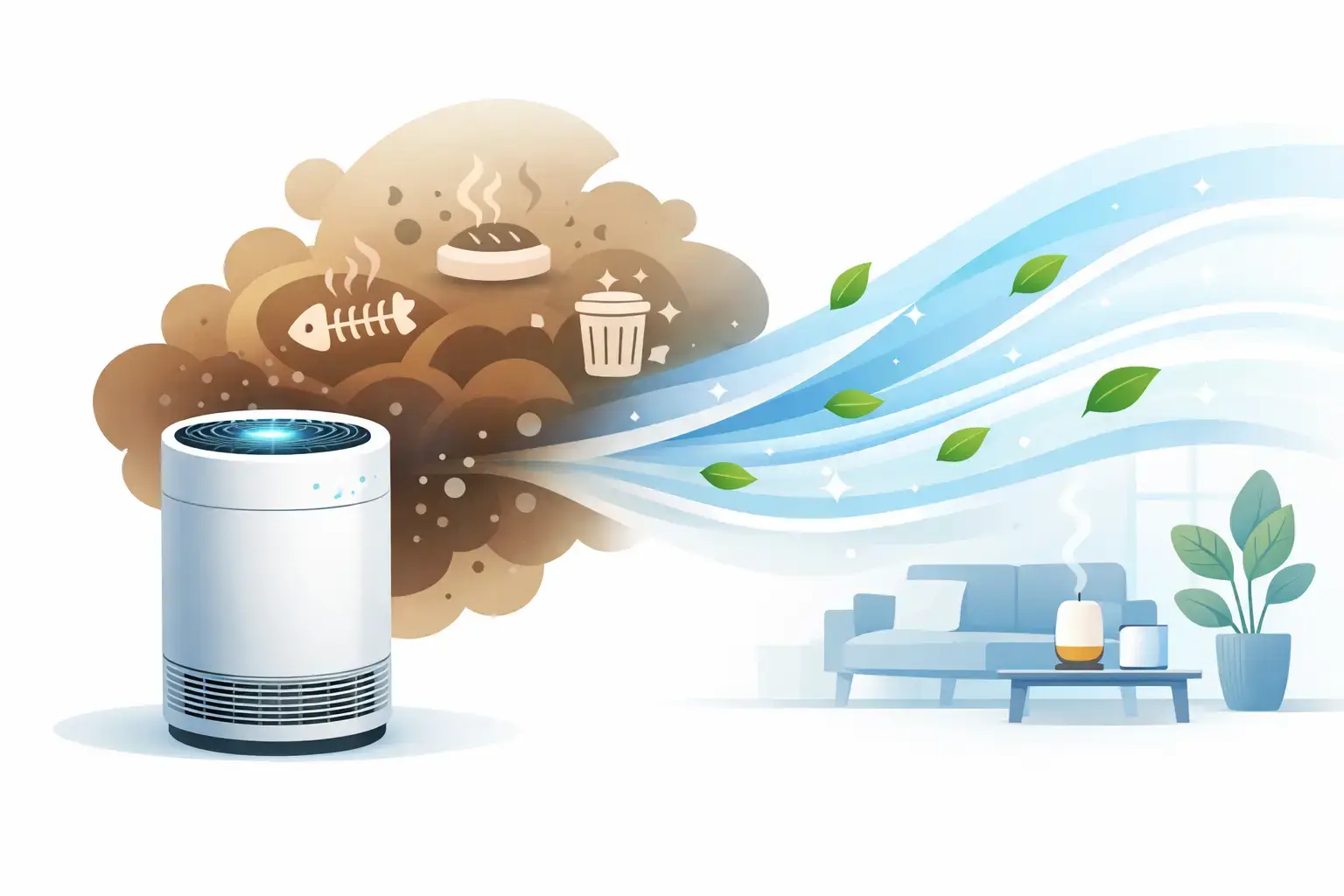
For odours, the key component is an activated carbon filter. Carbon works by adsorbing gas molecules onto its surface. In plain terms, it traps the compounds causing the smell. The amount and quality of carbon make a real difference. A thin carbon sheet may reduce light smells for a while, but it will not cope well with stronger or repeated odours.
What types of odours can an air purifier help with?
Air purifiers can be very useful for everyday household smells, especially when the source is ongoing and the room lacks proper ventilation. Cooking odours are a common example. Frying, spices, fish and burnt food all release airborne compounds that can drift through open-plan living spaces and stick around for hours. A purifier with decent carbon filtration can reduce that residual smell more quickly.
Pet odours are another area where a purifier can help, though there is a catch. If the smell is airborne - from wet dog fur, litter trays, or general pet presence - carbon filtration can make a noticeable difference. If the odour is embedded in carpets, upholstery or pet bedding, the purifier will only do part of the job. The source still needs cleaning.
Smoke smells, including tobacco smoke and occasional burnt-toast disasters, can also be reduced. Here again, the best results come from a purifier with strong carbon filtration combined with particle filtration. Smoke contains both particles and gases, so dealing with one without the other is only a partial fix.
Musty odours are more complicated. A purifier may reduce the smell in the air, but if the cause is damp, mould or poor ventilation, the smell will keep returning. The machine can improve comfort, but it cannot solve a moisture problem hidden behind a wall or under flooring.
Why some air purifiers disappoint
The biggest reason people feel let down is simple: they bought an air purifier for one job, but the product was built mainly for another. Marketing often focuses on clean air in broad terms, which sounds reassuring but tells you very little about odour performance.
If odours are your main concern, the filter specification matters more than general claims. A purifier can be quiet, well-designed and effective for allergens while still being weak on smells. This is not a fault in the product. It is a mismatch between the problem and the solution.
The second issue is filter size. Activated carbon needs enough volume to do meaningful work. A token layer may help when the machine is new, but once the carbon is saturated, performance drops. That is why stronger odour problems usually need a purifier with a more substantial carbon stage and regular filter replacement.
Room size also matters. A small purifier placed in a large kitchen-diner will struggle, no matter how good the filter is. Air needs to pass through the system often enough to make a visible difference. If the unit is undersized for the space, odours can keep circulating faster than the purifier can remove them.
HEPA vs carbon for odour removal
This is the part worth getting clear before you buy. HEPA and activated carbon do different jobs, and the best air purifiers use both.
HEPA is for particles. It helps with dust, pollen, smoke particles, some bacteria, and pet dander. It supports a fresher-feeling environment because it removes the airborne matter that can make a room feel stale or irritating.
Activated carbon is for smells and gases. It is the part that targets the compounds behind cooking odours, pet smells, household fumes and smoke-related gases.
If you are trying to improve overall air quality, a combined system makes the most sense. If you specifically want to know can air purifiers remove odours, carbon is the answer you should look for first.
When an air purifier will help - and when it won’t
An air purifier helps most when the odour is airborne and the machine is properly matched to the room. It is especially useful in bedrooms, living rooms, home offices and open-plan spaces where smells drift and linger. It can also make a home feel calmer and cleaner day to day, even when the change is subtle rather than dramatic.
But it will not replace basic housekeeping or ventilation. If a bin needs emptying, a carpet needs cleaning, or a damp issue needs fixing, an air purifier cannot do that work for you. It treats the air passing through it. It does not remove the source on its own.
This is why the best approach is layered. Open windows when possible. Clean soft furnishings if smells have settled into them. Deal with moisture properly. Then use an air purifier to continuously reduce what remains in the air. That is where it earns its place.
What to look for if odours are your priority
Start with activated carbon, and do not treat it as an optional extra. If a product is vague about the carbon stage, that is usually a sign not to rely on it for serious odour control.
Next, check that the purifier is suitable for your room size. A unit that can comfortably handle the space will work more efficiently and more quietly over time. Noise matters more than people think. If a machine is too loud to run regularly, real-world performance drops quickly.
Filter replacement should also be straightforward. There is no point buying a purifier that becomes a hassle after a few months. The best products fit into daily life without drama. That principle matters across home wellness generally, and it is one reason brands like Elvora focus on practical devices that solve a clear problem without adding friction.
Finally, be realistic about what “remove” means. In most homes, the goal is not a perfectly scent-free environment at every moment. It is a noticeable reduction in stale, lingering or intrusive smells so the room feels fresher and more comfortable.
A simple expectation check
If you want an honest answer, air purifiers can absolutely help with odours, but they are not magic boxes. They perform best when they have proper carbon filtration, enough airflow for the room, and a source problem that is being managed rather than ignored.
That may sound less exciting than bold marketing claims, but it is better for making the right choice. A good air purifier should earn its place in your home by quietly improving how the space feels every day. If odours are part of what is making a room feel tired, stuffy or unpleasant, the right one can make a real difference - just expect practical improvement, not miracles.
And that is often enough. When the air feels cleaner, the home feels easier to live in.