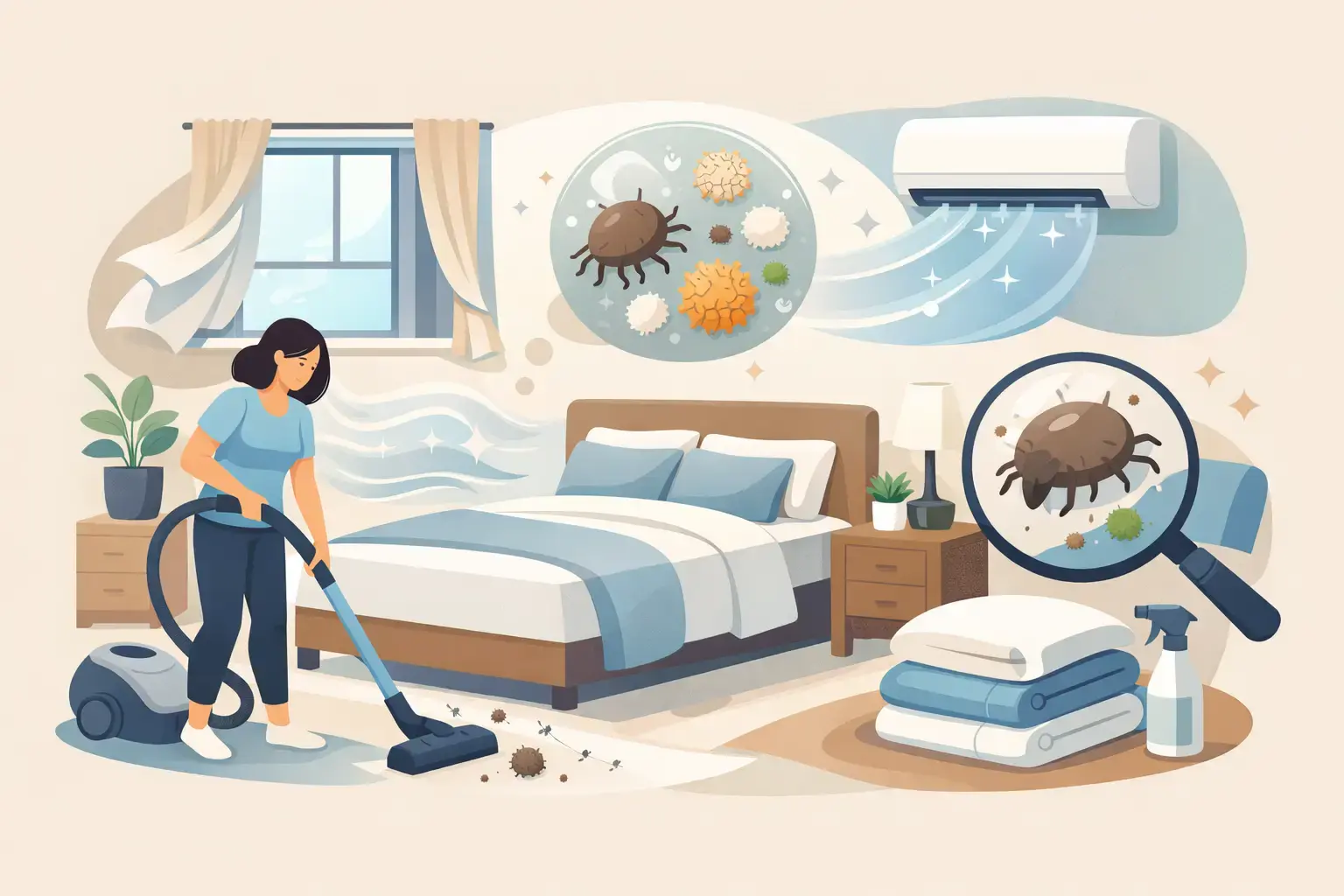
You notice it most at night - a blocked nose, itchy eyes, a scratchy throat, or that low-level feeling that your bedroom never quite feels fresh. If you are wondering how to reduce bedroom allergens, the answer is usually not one big fix. It is a series of small, practical changes that make the room easier to breathe in and easier to sleep in.
Bedrooms collect more irritants than most people realise. You spend hours there every night, usually in close contact with fabric, dust, skin cells, and trapped air. That makes the room a prime spot for dust mites, pet dander, mould spores and pollen. The good news is that you do not need a complicated routine or a cupboard full of sprays to improve it.
What is actually causing the problem?
Before you change anything, it helps to know what you are dealing with. In most UK homes, bedroom allergens usually come from four main sources: dust mites in bedding and soft furnishings, pet dander carried on fur and clothing, pollen brought in from outdoors, and mould encouraged by excess moisture.
These triggers often overlap. A room can be dusty and slightly damp. You might also have a dog that sleeps on the bed and windows that stay open during high pollen days. That is why quick surface cleaning alone often falls short. If the sources stay in place, the symptoms usually do too.
How to reduce bedroom allergens at the source
The most effective approach is to remove or control the things allergens feed on and settle into. Start with the bed, because that is where the exposure is highest.
Wash bedding properly, not just often
Sheets and pillowcases should be washed weekly. If allergies are a regular issue, duvets, mattress protectors and pillow protectors need attention too. Warm washes help, but the key point is consistency. Dust mites build up over time, and missing a week here and there gives them space to return.
If you only wash the visible layers, you may still be sleeping on allergen build-up inside pillows and the mattress surface. Protective covers can help, especially if you are sensitive to dust mites. They create a barrier without changing the feel of the bed too much.
Be stricter with soft furnishings
A bedroom full of cushions, throws, fabric headboards and heavy curtains can look calm while quietly holding onto dust. If your symptoms are ongoing, simplify the room. Fewer fabric surfaces usually means fewer places for allergens to collect.
That does not mean the room has to feel bare. It just means being more selective. Washable curtains often make more sense than thick drapes, and one throw you clean regularly is better than five that never get washed.
Vacuum the right way
Vacuuming helps, but only if it is done thoroughly and often enough. Carpets, rugs and upholstered furniture hold onto allergens deep below the surface. If the bedroom is carpeted, vacuum at least weekly and go slowly enough for the machine to do its job.
If symptoms are strong, hard flooring is usually easier to manage than carpet. That is not always realistic, especially in rented homes, but it is worth knowing the trade-off. Carpet feels warmer underfoot, yet it tends to trap more dust and dander.
Air quality matters more than people think
A tidy room can still have poor air. That is often the missing piece.
Keep humidity under control
Dust mites thrive in humid conditions, and mould does too. Bedrooms that feel stuffy, cold or damp are more likely to encourage both. Aim for a balanced level of moisture in the air. Too much humidity creates a breeding ground for allergens, but air that is too dry can irritate the nose and throat.
If condensation forms on windows in the morning, that is a clue the room may be too damp. In that case, improving ventilation matters. Open windows when outdoor conditions are suitable, keep furniture slightly away from cold walls, and do not dry washing in the bedroom if you can avoid it.
Be smart about fresh air
Fresh air helps, but it depends on what is outside. During high pollen days, opening windows for hours can make things worse. If hay fever is part of the problem, air the room early morning or after rainfall when pollen levels are often lower.
This is one of those areas where timing matters more than effort. You do not need to choose between stale air and pollen-heavy air all day long. A more controlled approach is usually enough.
Consider a bedroom air purifier
If allergens are persistent, an air purifier can be a practical addition, especially in rooms where dust, pet dander or pollen keep returning. It does not replace cleaning, but it can help reduce what stays suspended in the air while you sleep.
The best use case is simple: a bedroom where you want cleaner air without adding another complicated routine. A quality unit earns its place by running quietly, filtering effectively and requiring very little from you day to day. That kind of tool fits the way most people actually live, which is why brands like Elvora focus on products that solve a real household problem without adding friction.
Pets change the equation
A lot of people love having pets nearby at night. The problem is that pet dander travels easily and settles into bedding, curtains and carpets. Even if your cat or dog does not sleep on the bed, their allergens can still build up in the room through clothing, movement and shared furniture.
If allergies are mild, keeping pets off the bed may be enough to reduce symptoms. If they are stronger, keeping the bedroom pet-free often makes a noticeable difference. That can be a difficult shift, but it is often one of the most effective.
Wash pet bedding regularly, groom animals outside the bedroom where possible, and vacuum more often if pets have access to sleeping areas. There is no perfect workaround if dander is the main trigger, only degrees of improvement.
Dusting habits can help or make things worse
Many people dust in a way that simply moves particles around. A dry cloth can send fine dust back into the air, where it settles again later. A slightly damp cloth is usually better for hard surfaces like bedside tables, skirting boards and shelves.
Do not overlook the less obvious places. Lampshades, behind the bed, blinds, radiators and under furniture all collect dust quietly. Bedrooms with a lot of decorative objects also create more surfaces to clean. If you want lower-maintenance air quality, less clutter is not just about looks. It gives dust fewer places to sit.
Watch for hidden mould
If your bedroom has a musty smell, discoloured corners, peeling paint or recurring condensation, mould may be part of the issue. Cleaning visible patches is only part of the job. If damp keeps returning, the underlying cause needs attention.
This could be poor ventilation, cold external walls, leaking window seals or insulation problems. In some homes, especially older properties, mould is less about housekeeping and more about the building itself. That matters because no amount of surface cleaning will fully solve a moisture problem that starts behind the wall.
Small bedroom habits that reduce allergens
A few daily habits can lower your exposure without turning bedroom care into a project. Change out of outdoor clothes before getting into bed if pollen is high. Shower before sleep during hay fever season so pollen does not transfer from hair to pillows. Keep laundry put away rather than draped over chairs, where it gathers dust.
If you store items under the bed, use sealed containers. Open storage tends to collect fluff and fine dust. And if the bedroom doubles as a home office, be aware that extra paper, fabric seating and foot traffic can all add to the load.
When to do more
If you have made these changes and symptoms are still affecting your sleep, it may be time to think beyond the room. Whole-home humidity issues, central heating filters, nearby pollution, or undiagnosed allergies may be involved. It is also worth speaking to a pharmacist or GP if symptoms are frequent, severe, or hard to identify.
The aim is not to create a spotless showroom. It is to make your bedroom calmer, cleaner and less reactive. Better sleep starts with better air, and better air usually comes from simple choices repeated consistently. Start with what touches you most closely, keep the room easier to clean, and let every change earn its place.