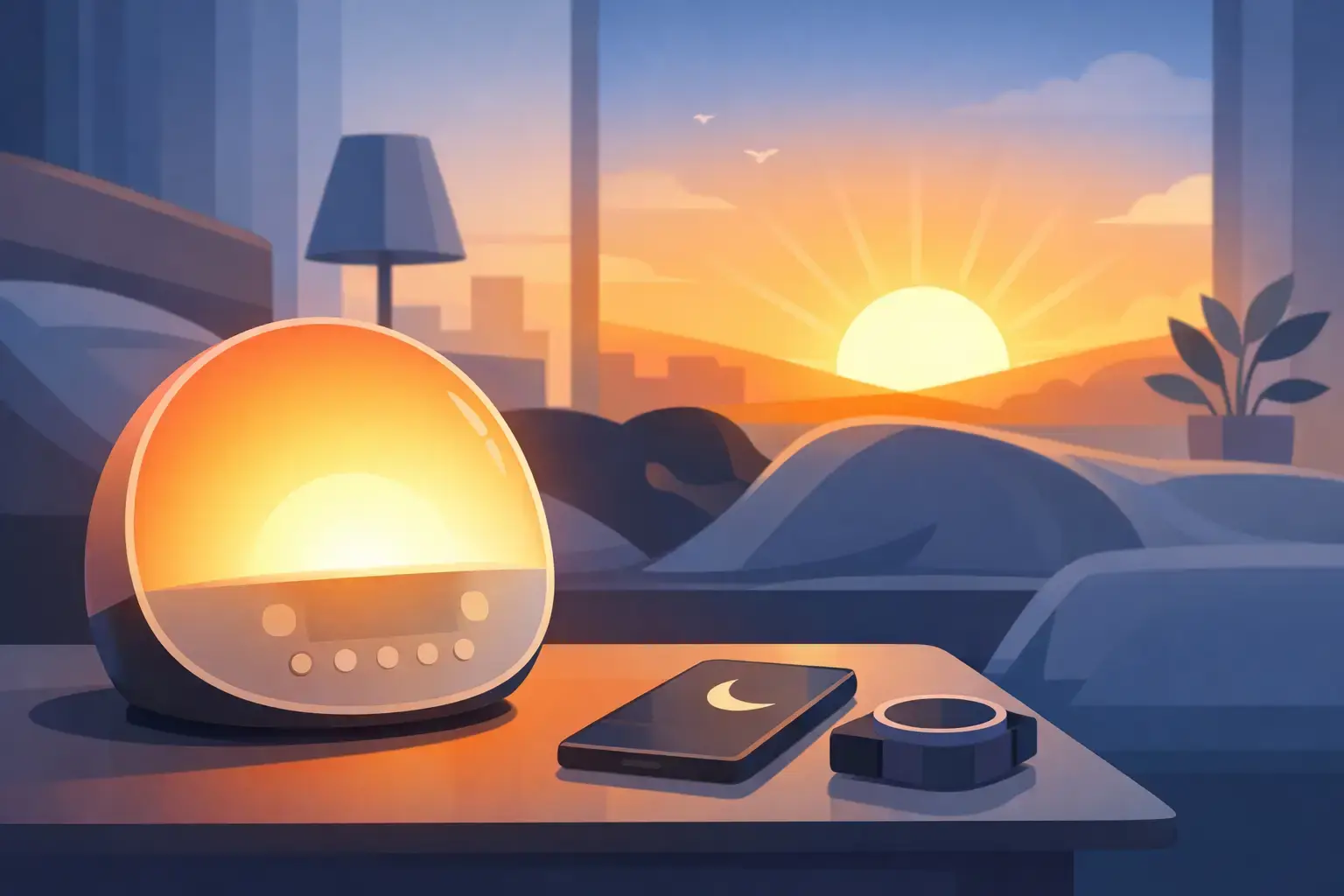
A harsh alarm can ruin the first five minutes of your day. That is why a proper sunrise alarm clock review matters more than it might seem. If you wake up groggy, hit snooze on repeat, or dread a dark winter morning, the right clock can make getting up feel less abrupt and a lot more manageable.
A sunrise alarm clock is a simple idea. Instead of dragging you out of sleep with a sudden noise, it gradually brightens before your set wake-up time, often followed by sound. Done well, it feels gentler and more natural. Done badly, it is just another bedside gadget with too many buttons and not enough practical value.
Sunrise alarm clock review: what actually matters
Most people do not need a long list of features. They need a clock that helps them wake up more comfortably, works reliably, and does not create extra faff at bedtime. That is the standard worth judging against.
The first thing to look at is the light itself. A sunrise alarm clock lives or dies on the quality of its gradual brightening. If the light ramps up smoothly, reaches a useful brightness level, and looks warm rather than clinical, it can make a real difference. If it stays too dim or changes too abruptly, the effect is weaker.
The second is usability. This category attracts feature creep. Some models try to be a lamp, speaker, radio, meditation aid and smart hub all at once. For many households, that is not a benefit. It is clutter. A good sunrise alarm clock should be easy to set, easy to adjust half asleep, and clear enough that you do not need to keep the manual in the drawer.
Then there is sound. Some people wake with light alone, especially in summer or lighter sleep phases. Others need a backup. Natural sounds can be pleasant, but only if they are not tinny or oddly looped. Traditional alarm tones still have a place if they can be set at a reasonable volume and rise gradually rather than going off like a fire drill.
The real benefits of a sunrise alarm clock
The main advantage is not magic. It is simply a calmer transition from sleep to waking. That can mean less panic, less hammering of the snooze button, and a better start to the morning. For working professionals, that matters. For parents already facing fractured sleep, it matters even more.
There is also a seasonal benefit. During darker months, waking to a gradually brightening room can feel far less jarring than waking in pitch black and immediately switching on the overhead light. It does not replace daylight, and it will not fix poor sleep habits on its own, but it can make early starts easier to handle.
For some people, a sunrise alarm also helps bedtime routines. Many models include a sunset or dimming function, which can be useful if you like softer lighting in the evening. That said, this only helps if the controls are simple. If setting the evening mode feels like programming a microwave from 2004, most people will stop using it within a week.
Where sunrise alarm clocks fall short
A balanced sunrise alarm clock review needs to be honest about trade-offs. These clocks are not for everyone.
If you sleep very deeply, light alone may not wake you. In that case, you need a model with a dependable sound alarm as backup. If your bedroom is already bright in the morning, especially in summer, the sunrise effect may feel less noticeable unless you use blackout curtains and set the timing carefully.
Price is another consideration. Premium models can cost noticeably more than a standard alarm clock, and not all of them justify it. Better materials, smoother light transitions and simpler controls are worth paying for. Fancy extras that you never use are not.
There is also the issue of bedside space. Some units are compact and tidy. Others are bulky, awkwardly shaped, or too bright even when not in active use. If your bedroom setup is minimal, design matters more than brands often admit.
What makes a good model worth buying
The best sunrise alarm clocks tend to get the basics right rather than trying to impress on paper. You want a warm-toned light with adjustable brightness, a wake-up window that gives enough time for a genuine gradual rise, and controls that make sense at a glance.
Build quality matters too. This is a product you touch every day, often when tired. Buttons should feel responsive. The display should be readable without turning the room into a beacon. The body should look at home on a bedside table, not like leftover office equipment.
Reliability is non-negotiable. If an alarm clock occasionally fails, it is not a small flaw. It defeats the point. That is one reason simpler models often perform better over time than heavily connected alternatives. Many people do not want another device tied to an app, another set of permissions, or another product that becomes annoying the moment Wi-Fi drops. In that respect, the best sunrise clocks are practical tools first.
Sunrise alarm clock review: who gets the most value?
The strongest fit is anyone who struggles with abrupt wake-ups. If your current alarm feels like being launched into the day, a sunrise model is worth considering. It is also a sensible option for people trying to build a steadier morning routine without adding friction.
Busy households tend to appreciate products that quietly do their job. A sunrise alarm clock suits that mindset. It is useful for early commuters, parents getting up before the rest of the house, and anyone who wants mornings to feel less aggressive.
It can also be a smart buy for those who prefer less screen time. Using a mobile phone as an alarm is convenient, but it keeps your mobile on the bedside table and often invites late-night scrolling. A dedicated alarm clock creates a cleaner boundary between sleep and notifications.
Still, expectations need to be realistic. If you are regularly sleeping too little, no alarm clock will solve that. If your sleep is disrupted by stress, noise, overheating, or poor bedtime habits, a sunrise light can help at the edges but not at the core. The best results come when it supports a routine that is already moving in the right direction.
Features worth paying for and features you can skip
A few upgrades are genuinely useful. Adjustable brightness is one. So is the option to change sunrise duration, because not everyone responds well to the same timing. A choice of alarm sounds, gradual volume increase, and a low-glare display are all practical improvements.
USB charging, app pairing and voice assistant integration are less essential. For some people they are convenient. For many, they are just more things to set up, maintain and ignore later. If the goal is better mornings, simpler usually wins.
Radio can go either way. Some users like waking to speech or music, others find it dated or inconsistent. The same goes for colour-changing mood light functions. Pleasant if you will actually use them, irrelevant if you will not. A clean design and dependable daily use should come first every time.
That is broadly where brands like Elvora have the right instinct. In home wellness, products should earn their space through utility, not novelty.
So, is a sunrise alarm clock worth it?
For the right person, yes. Not because it transforms your life overnight, but because it improves a small daily moment that affects everything after it. A better wake-up can make mornings feel more controlled, less frantic and slightly easier to start.
The key is buying with discipline. Ignore gimmicks. Focus on light quality, simple controls, dependable alarms and a design you will not resent seeing every night. If a model offers those things, it is doing the real job.
If your mornings are already smooth and you wake naturally with no trouble, you may not need one. But if dark starts, repeated snoozing and harsh alarms are part of your routine, a sunrise clock is one of the few bedroom devices that can justify itself quickly.
A good one will not shout for attention. It will just help you wake up in a way that feels a bit more human, which is often exactly what a home product should do.