If your feet feel heavy by late afternoon, your socks leave marks, or sitting at a desk all day leaves your lower legs feeling stiff, it is reasonable to ask: do foot massagers help circulation? The short answer is yes, they can help support healthy blood flow and reduce that sluggish, tired feeling in the feet and calves. But they are not a cure for poor circulation, and the difference matters.
A foot massager sits in the useful middle ground. It is not a medical treatment. It is also not just a nice extra. Used well, it can be a practical tool for comfort, recovery, and routine relief at home.
Do foot massagers help circulation or just feel relaxing?
They can do both. The relaxing part is obvious - warmth, pressure, and rhythmic movement tend to ease tension quickly. The circulation side is a bit more specific.
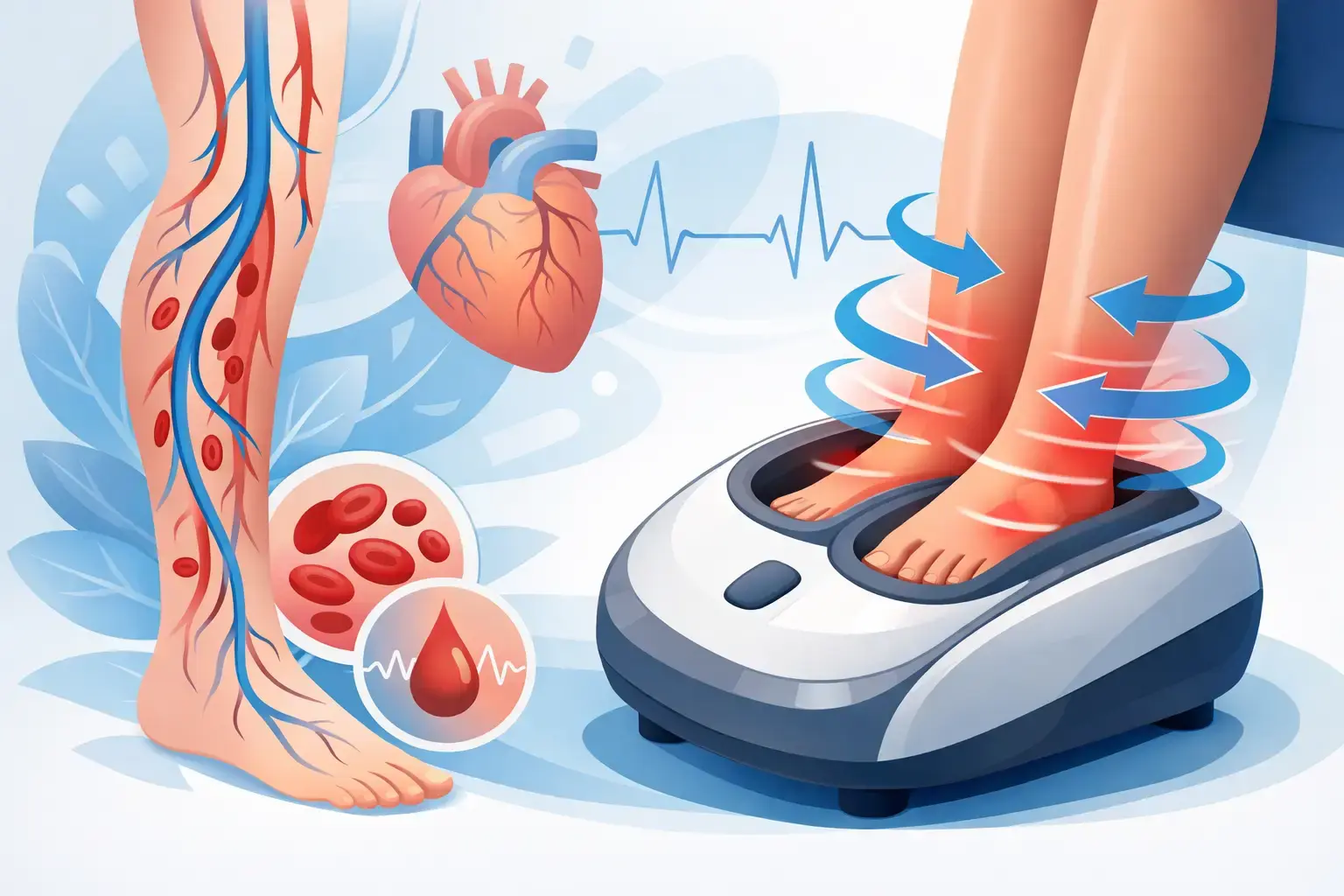
Massage helps by stimulating soft tissues and encouraging movement in the feet and lower legs. That mechanical pressure may support blood flow in the area while also helping your muscles relax. When tissues are less tense and your feet are moving, even passively, that can reduce the feeling of stagnation many people get after long periods of sitting or standing.
This is why a foot massage often leaves feet feeling warmer, lighter, and less tight. For many people, that is a sign that circulation has improved locally, at least for a period of time.
What a foot massager does not do is fix the underlying cause of genuinely poor circulation. If someone has an arterial problem, diabetes-related complications, severe swelling, or a vascular condition, no home device should be treated as the answer on its own.
How a foot massager may support blood flow
Most foot massagers use some combination of kneading, rolling, compression, vibration, or heat. Each can play a slightly different role.
Kneading and rolling apply direct pressure to the muscles and soft tissues of the feet. That pressure can encourage circulation in the area and help release tightness. Compression styles, especially those that gently squeeze and release, may help mimic the pumping effect that movement usually provides. Heat can widen blood vessels slightly, which may help the area feel looser and warmer. Vibration can add another layer of stimulation, although some people find it useful and others simply find it noisy.
The key point is simple: circulation responds well to movement and muscular activity. A foot massager cannot replace walking, stretching, or exercise, but it can add useful stimulation when your routine has involved too much sitting, too much standing, or too little recovery.
Who is most likely to notice a benefit?
The people who tend to get the most from foot massagers are not necessarily those with diagnosed circulation disorders. More often, they are people dealing with everyday lifestyle strain.
If you work at a desk, commute long hours, stand on hard floors, train regularly, or simply end the day with tired feet, a foot massager may help relieve that congested, achy sensation. Busy parents and professionals often fall into this group. The issue is not always a medical circulation problem. Often, it is a combination of fatigue, muscle tension, fluid build-up, and lack of movement through the day.
Older adults may also appreciate the comfort and warmth, especially if their feet often feel cold. People recovering from demanding workouts sometimes use foot massage as part of a wider recovery routine. In these cases, the benefit is practical rather than dramatic: less tightness, more comfort, and a greater sense that your lower legs are not carrying the whole day with them.
When the answer is not so simple
There is a point where “do foot massagers help circulation” becomes the wrong question. If your feet are persistently cold, numb, discoloured, painful when walking, or swelling for no clear reason, that calls for proper medical advice.
A foot massager may make the area feel better temporarily, but comfort is not the same as diagnosis. If there is an underlying issue with arteries, veins, or nerve function, relying on massage alone can delay the help you actually need.
There are also people who should be cautious. If you have diabetes with reduced sensation, peripheral neuropathy, deep vein thrombosis, severe varicose veins, open wounds, or an existing circulatory disorder, it is best to speak with a clinician before using any massage device. The same applies during pregnancy if swelling is significant or unusual.
This is not about alarm. It is about using the right tool for the right job.
What a foot massager can realistically improve
A good foot massager is best seen as a support tool. It may help reduce tension, encourage local blood flow, ease mild swelling linked to inactivity, and make your feet feel less fatigued. That matters more than it sounds.
When your feet and lower legs feel better, you are more likely to move more, stretch more, and recover better. Small gains in comfort can improve the rest of your routine. For people who spend all day on their feet, that can mean a more comfortable evening. For those who sit too long, it can be a useful reset between work and home life.
The results are usually modest but noticeable. Think relief, not transformation.
Do foot massagers help circulation better with heat?
Often, yes. Heat can be especially helpful if your feet feel cold, stiff, or tense. It tends to make massage feel more effective because the muscles relax more easily and the experience is simply more comfortable.
That said, more heat is not always better. Gentle warmth is usually enough. Excessive heat can be uncomfortable, and for anyone with reduced sensitivity in the feet, it can be risky. The best devices keep things simple and controlled.
For many people, the most useful setup is moderate massage with optional heat for 15 to 20 minutes. That is long enough to feel the effect without overdoing it.
How to use one for the best results
If your main goal is to support circulation, timing and consistency matter more than intensity. A short session at the end of the day can help if your feet feel heavy from standing. A session after long periods of sitting can also work well, especially if you follow it with a short walk.
It is worth keeping expectations grounded. A foot massager works best as part of a wider routine that includes regular movement, hydration, and sensible footwear. If you spend ten hours barely moving and then expect fifteen minutes of massage to undo all of it, that is asking too much.
In practical terms, use the device regularly rather than aggressively. Start on a lower setting. Let your body tell you whether kneading, compression, vibration, or heat actually feels helpful. The best routine is the one you will keep.
Choosing the right type of foot massager
Not every foot massager is built for the same person. Some focus on deep kneading and pressure, which can feel excellent for tired soles but too intense for sensitive feet. Others use gentler air compression, which some people prefer if the goal is more about circulation support and less about deep tissue pressure.
If comfort is your priority, look for adjustable settings and optional heat. If your feet are sensitive, avoid devices that only offer one strong mode. If ease matters, choose something you can use without setup, apps, or fuss. The best wellness tools are the ones that fit naturally into real life.
That is also where premium design earns its place. A good home device should feel reliable, straightforward, and worth using regularly. If it turns into cupboard clutter after a week, it was never solving the right problem.
The honest answer
So, do foot massagers help circulation? Yes, in a practical everyday sense they can. They may encourage local blood flow, ease tension, reduce that heavy-footed feeling, and help your lower legs feel more comfortable after long hours of sitting or standing.
What they do not do is replace movement, fix medical circulation issues, or stand in for professional advice when symptoms are persistent or severe. They are most useful when you treat them as part of a calm, realistic home routine - one that supports recovery without pretending to be more than it is.
If your goal is simple - warmer feet, less tension, and a better way to unwind at the end of the day - a well-made foot massager can be a genuinely useful addition to the home. Sometimes the best wellness products are the ones that do one job well and make everyday comfort easier to keep.