Dust has a way of making a clean home feel unfinished by lunchtime. You wipe the shelf, vacuum the rug, open the blinds, and there it is again. If you are looking for how to reduce indoor dust without turning housework into a second job, the answer is usually not one dramatic fix. It is a handful of small changes that stop dust building up in the first place.
Why dust keeps coming back
Indoor dust is not just dirt tracked in from outside. It is usually a mix of fabric fibres, skin cells, pet dander, pollen, soil, and tiny particles that settle on every surface. Some homes collect more than others because of carpets, soft furnishings, pets, older windows, dry air, or simply heavier foot traffic.
That matters for more than appearance. Dust can irritate allergies, make rooms feel stale, and leave bedrooms less comfortable than they should be. If your goal is a home that feels calmer, fresher, and easier to maintain, reducing dust is one of the quickest wins.
How to reduce indoor dust without overcomplicating it
The most effective approach is to deal with dust at three points: where it enters, where it collects, and where it gets pushed back into the air. Once you think in those terms, the job becomes far more manageable.
Start at the door
A lot of dust arrives from outside on shoes, bags, coats, and paws. A decent doormat at each entrance helps, but only if it is cleaned regularly. If the mat is full of grit, it stops doing its job.
A shoes-off habit also makes a noticeable difference, especially in busy households. It is not about making your home feel formal. It is simply one of the easiest ways to stop outdoor dust spreading across floors and into carpets.
If you have pets, keep a towel or pet mat near the door for muddy or dusty days. That small bit of friction at the entrance can save you a surprising amount of cleaning later.
Vacuum better, not just more often
Vacuuming is useful, but the machine matters. A vacuum with poor filtration can stir up fine dust and push part of it back into the room. If dust seems to reappear straight after cleaning, this may be part of the problem.
Look for strong filtration, especially if anyone in the house is sensitive to dust. Go slowly over rugs and carpets rather than rushing through. High-traffic areas need more attention, but bedrooms deserve it too because bedding and clothing shed fibres constantly.
If you have mostly hard floors, vacuuming can still beat sweeping. Sweeping often flicks dust into the air, where it settles somewhere else. Vacuum first, then mop if needed.
Dust surfaces in the right order
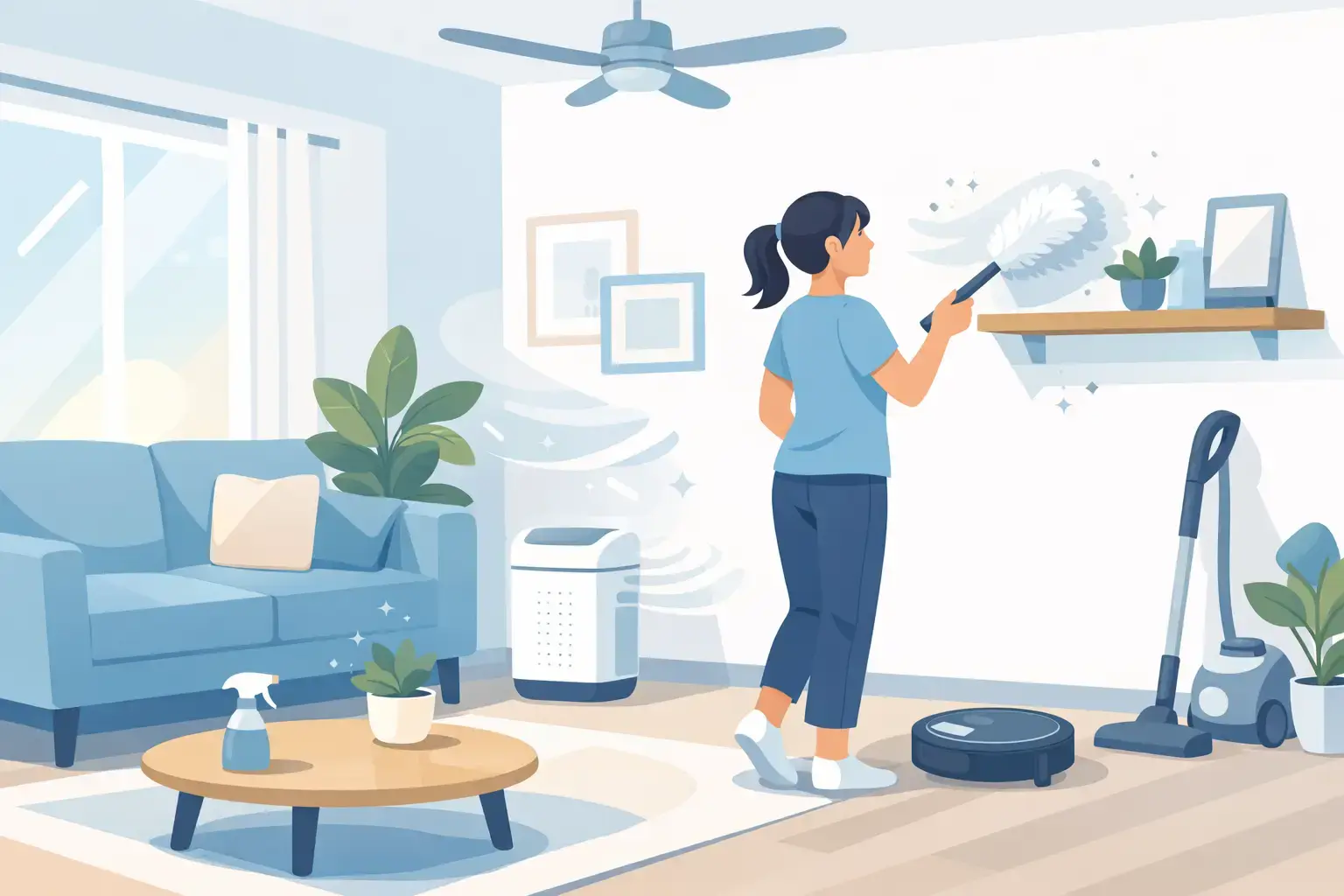
One common mistake is dusting low surfaces first and high ones last. That just means particles fall onto what you have already cleaned. Work from top to bottom - shelves, window ledges, furniture, then floors.
Use a damp microfibre cloth rather than a dry duster that simply moves dust around. You do not need a cabinet full of sprays. Plain water is often enough for everyday dusting.
Decor also plays a part here. Open shelving, piles of books, textured lampshades, and lots of small ornaments all collect dust quickly. If you want less upkeep, the answer is not an empty home, but a more edited one.
Soft furnishings are often the real culprit
Dust loves fabric. Curtains, cushions, throws, rugs, and upholstered furniture all trap particles and release them again whenever they are disturbed.
That does not mean you need to strip the house back. It means washing and rotating soft furnishings should be part of your regular routine. Curtains can be overlooked for months, then quietly become one of the biggest dust reservoirs in the room.
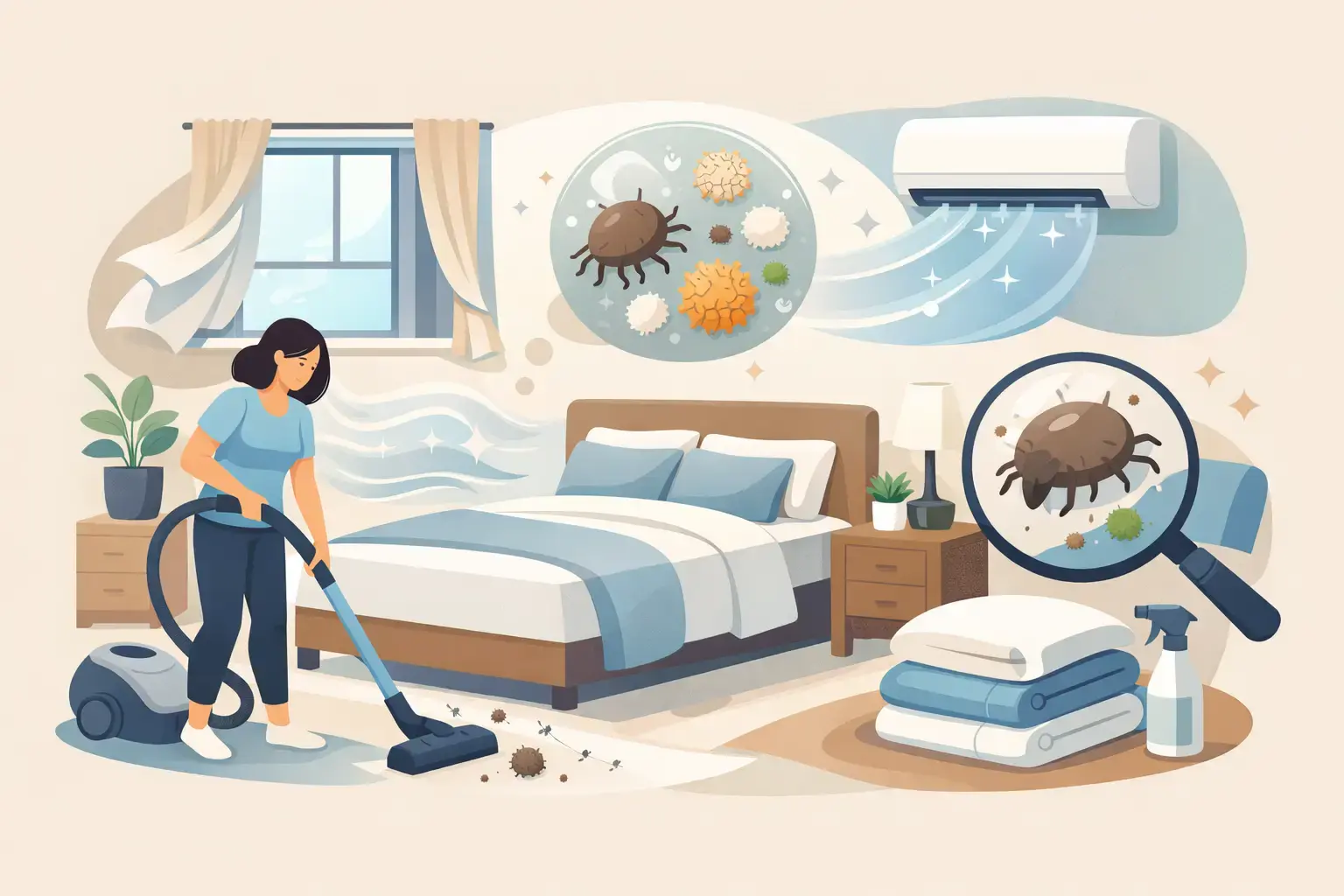
Bedrooms deserve special attention. Wash bedding weekly, including pillowcases, and do not forget the mattress itself. Vacuuming the mattress surface occasionally can help reduce the build-up of dust and skin flakes. If you rarely clean under the bed, that area is likely doing more than its fair share.
Carpets versus hard flooring
If you are serious about how to reduce indoor dust, flooring choices matter. Carpets trap dust very effectively, which can be helpful until they are disturbed. Then some of that dust returns to the air.
Hard flooring is usually easier to keep on top of, especially in hallways, living spaces, and bedrooms. But replacing all flooring is expensive and not always realistic. If you have carpets, focus on good vacuuming, regular rug cleaning, and keeping shoes off indoors. Those steps can close much of the gap.
Airflow helps, but only when used well
Opening windows can freshen a room, but it is not always the best move for dust. On high-pollen days, near busy roads, or during dry weather, open windows may bring more particles in than they let out.
This is where it depends on your environment. In some homes, brief ventilation works well. In others, cleaner indoor air comes from controlling what enters and filtering what stays.
Use an air purifier where it counts
An air purifier can make a real difference to fine airborne dust, particularly in bedrooms and living rooms where you spend the most time. The key is not hype. It is choosing a unit designed to capture small particles and using it consistently.
Placement matters. Tucking it behind furniture or only switching it on occasionally limits the benefit. For many households, a purifier earns its keep most clearly in the bedroom, where cleaner air can support a more comfortable night and less dusty feel by morning.
For brands like Elvora, that practical role is the point - not extra complexity, just a straightforward way to improve daily comfort.
Keep your filters and vents clean
Dust does not only settle on visible surfaces. It also collects in places you rarely think about: extractor fans, radiators, vents, and any filter-based appliance.
If you run an air purifier, dehumidifier, or heating system, check and clean filters as recommended. A clogged filter cannot work properly, and neglected vents become dust sources of their own. The same goes for bathroom fans and kitchen extraction, which can quietly gather grime over time.
Radiators are another overlooked spot in UK homes. Dust trapped behind or inside them can blow back into the room once the heating is on. A radiator brush or a careful vacuum attachment can help here.
Humidity plays a bigger role than most people think
Very dry air allows dust to stay airborne more easily. Slightly higher humidity can help particles settle, but too much moisture creates a different problem: mould and mustiness. The sweet spot is balance.
If your home feels extremely dry, especially in winter with the heating on, it may be worth checking indoor humidity. You do not need to obsess over it, but comfort and air quality often improve when the environment is not too dry or too damp.
Small habits that make a visible difference
If dust is a constant frustration, the answer is usually consistency over intensity. A few habits work better than an occasional deep clean. Folding clothes away instead of leaving them on a chair, keeping laundry off the floor, brushing pets regularly, and wiping surfaces before dust becomes obvious all help reduce the overall load.
Laundry rooms and wardrobes can also contribute more dust than expected. Fabrics shed, baskets collect lint, and clutter creates surfaces where dust settles undisturbed. If a room always seems dusty no matter what you do, look for the quiet sources rather than just cleaning the obvious ones harder.
When to lower expectations a bit
Some dust is unavoidable. Older homes, period properties with draughts, busy family routines, pets, and urban locations all make dust harder to control completely. The goal is not a sterile house. It is a home that feels cleaner, calmer, and easier to live in.
That means choosing the fixes that match your space and routine. A parent with two children and a dog does not need the same plan as someone in a one-bedroom flat. If you focus on entry points, fabrics, filtration, and better cleaning habits, you will usually see a meaningful improvement without making life harder.
A less dusty home is not built through perfection. It is built through a few smart decisions repeated often enough to matter.